International Society of Sports Nutrition position stand: diets for body weight reduction翻译学习-上
International Society of Sports Nutrition position stand: diets for body weight reduction
国际运动营养学会的立场声明:用于减重的饮食方法
Abstract
The International Society of Sports Nutrition (ISSN) has developed an official position on diets for body weight reduction. This critical analysis of the literature is intended to provide a scientific foundation for practitioners, coaches, and trainees regarding the effects of the major diet types in adults who are generally healthy, physically active, and/or athletic, while drawing from clinical research in those with overweight/obesity, when relevant. This position stand does not address acute dehydration-based weight cutting, pharmacotherapy (i.e. GLP-1RAs), or bariatric surgery. The following 15 points constitute the Position Statement of the Society; the Research Committee has approved them.
国际运动营养学会(International Society of Sports Nutrition,ISSN)针对以降低体重为目的的饮食方法制定了官方立场声明。本立场声明通过对相关文献进行批判性分析,旨在为运动营养实践人员、教练及训练者提供科学依据,以阐明主要饮食模式对总体健康状况良好、身体活动水平较高和/或从事竞技体育的成年人的影响;在适当情况下,亦参考针对超重或肥胖人群开展的临床研究。
本立场声明不涉及基于急性脱水的快速减重策略、药物治疗(如胰高血糖素样肽-1受体激动剂,GLP-1RAs)或减重手术。
以下15项要点共同构成国际运动营养学会的正式立场声明,并已获得该学会研究委员会的批准。
1)
Diets for body weight reduction can be broadly categorized by the magnitude of the energy deficit, linearity of the deficit, and macronutrient composition. These factors need to be tailored to individual preferences, tolerances, and goals.
减重饮食的分类与个体化
以降低体重为目的的饮食方法,可根据能量缺口的大小、能量缺口的线性特征以及宏量营养素组成进行广义分类。上述因素均应根据个体的偏好、耐受程度及目标进行针对性调整。
2)
Very-low-energy diets (\<800 kcal/day) and low-energy diets (800–1200 kcal/day) produce greater short-term weight loss but lack long-term advantages over less aggressive energy restrictions, such as calorie-controlled diets. These aggressive diets may increase lean mass loss, although adequate protein intake and resistance training may mitigate this risk. Caution is warranted about insufficiencies in vitamins, minerals, fiber, and other nutrients.
极低能量饮食与低能量饮食
极低能量饮食(Very-Low-Energy Diets,VLEDs;每日能量摄入低于800 kcal)和低能量饮食(Low-Energy Diets,LEDs;每日能量摄入为800–1200 kcal)能够产生更显著的短期减重效果,但与限制程度相对温和的饮食策略(如热量控制饮食)相比,并不具有长期优势。
此类激进的饮食干预可能增加瘦体重的流失,但充足的蛋白质摄入与抗阻训练有助于降低这一风险。此外,还应警惕维生素、矿物质、膳食纤维及其他营养素摄入不足的问题。
3)
The evidence at-large shows a lack of differential effects between intermittent fasting variants (alternate-day fasting, time-restricted eating, and twice-weekly fasting) and continuous energy restriction on anthropometric outcomes, although macronutrient quality plays an independent role in optimizing body composition and metabolic health.
间歇性禁食与持续性能量限制
总体证据表明,在人体测量学指标方面,不同形式的间歇性禁食,包括隔日禁食(Alternate-Day Fasting)、限时进食(Time-Restricted Eating)以及每周两次禁食(Twice-Weekly Fasting),与持续性能量限制(Continuous Energy Restriction)之间并不存在明显的差异性效应。
然而,宏量营养素的质量在优化身体组成及代谢健康方面具有独立作用。
4)
Intra-day meal frequency (as opposed to total daily nutrition) does not tend to crucially influence body weight and body fat reduction. Meal frequency may be individualized flexibly; no lower or upper limits can universally be prescribed to optimize outcomes. However, in physically active and athletic populations, distributing protein across at least three protein-rich meals (or eating occasions) per day may optimize lean mass retention and performance during sustained energy deficits.
每日进餐频率与蛋白质分配
与每日总体营养摄入相比,一天内的进餐频率通常不会对体重及体脂的降低产生决定性影响。进餐频率可以根据个体情况灵活安排,目前尚无法确定适用于所有人、能够使干预效果达到最优的统一进餐次数下限或上限。
然而,对于身体活动水平较高的人群及运动员而言,在持续性能量缺口期间,将每日蛋白质摄入分配至至少三次富含蛋白质的正餐(或其他进食时段),可能有助于最大程度地保留瘦体重并维持运动表现。
5)
Resistance training and sufficient protein intake are indispensable mitigators of lean mass loss in a sustained caloric deficit, regardless of the diet type or variant. Total daily protein is of primary importance; specific distribution of the constituent doses is a secondary concern.
抗阻训练与蛋白质摄入的重要性
无论采用何种饮食类型或其具体变式,抗阻训练与充足的蛋白质摄入,都是减轻持续性热量缺口所致瘦体重流失不可或缺的干预措施。
其中,每日蛋白质总摄入量具有首要重要性,而将蛋白质总量分配至各次摄入时的具体方式则属于次要考虑因素。
6)
For the general population, a daily protein intake of 1.2–1.6 g/kg BW is appropriate for supporting total body weight and fat loss, physical activity, and imparting benefits to musculoskeletal and cardiometabolic health.
一般人群的蛋白质摄入建议
对于一般人群而言,每日摄入每千克体重1.2–1.6 g蛋白质是适宜的。这一摄入水平有助于支持总体重及体脂的降低、身体活动,并可为肌肉骨骼健康及心血管代谢健康带来益处。
7)
Daily protein intakes ranging 1.6–2.2 g/kg BW combined with resistance training may optimize muscle anabolism, while higher intakes of 1.9–3.2 g/kg BW can maximize lean mass retention in lean, resistance-trained individuals sustaining hypocaloric conditions.
抗阻训练人群及低热量条件下的蛋白质需求
每日每千克体重摄入1.6–2.2 g蛋白质,并结合抗阻训练,可能有助于优化肌肉合成代谢。
对于体脂水平较低、具有抗阻训练经验且持续处于低热量摄入状态的个体,进一步提高蛋白质摄入量至每日每千克体重1.9–3.2 g,则可最大程度地保留瘦体重。
8)
The dietary carbohydrate‒fat proportion can be individualized to personal preference for the goal of weight loss, since the range of ketogenic to low-fat diets performs similarly.
碳水化合物与脂肪的摄入比例
以减重为目标时,饮食中碳水化合物与脂肪的摄入比例可以根据个人偏好进行个体化调整,因为从生酮饮食到低脂饮食,不同宏量营养素配比的饮食模式在减重效果方面总体表现相近。
9)
Ketogenic diets are effective at bodyweight and body fat reduction, but they also tend to decrease fat-free mass to a greater degree than higher-carbohydrate comparators, particularly in shorter trials where glycogen and total body water shifts can influence estimates.
生酮饮食对体重、体脂及去脂体重的影响
生酮饮食能够有效降低体重和体脂,但与碳水化合物摄入量较高的对照饮食相比,生酮饮食通常也会导致更大程度的去脂体重(Fat-Free Mass,FFM)下降。
这一现象在研究周期较短的试验中尤为明显,因为糖原储量及全身总水分的变化可能对去脂体重的估算结果产生影响。
10)
Adaptations to weight loss can be physical, physiological, and/or behavioral, and converge toward reducing energy expenditure to fulfill the body’s drive toward neutralizing disruptions to homeostasis imposed by the caloric deficit.
减重过程中的适应性反应
机体对体重下降所产生的适应性反应,可以表现为身体层面、生理层面和/或行为层面的变化。
这些适应性反应共同趋向于降低能量消耗,以满足机体抵消热量缺口所造成的内环境稳态扰动、恢复机体稳态的内在驱动。
11)
Adaptive thermogenesis is a reduction in resting energy expenditure beyond that predicted by changes in body composition. It can occur in response to hypocaloric conditions and weight loss, but it is not an inevitable response, and it may attenuate substantially upon attainment of weight stability.
适应性产热
适应性产热(Adaptive Thermogenesis)是指静息能量消耗的下降幅度超出了根据身体组成变化所预测的下降幅度。
这一现象可能由低热量摄入状态及体重下降所诱发,但并非减重过程中不可避免的生理反应。此外,当体重达到并维持稳定状态后,适应性产热的程度可能显著减弱。
12)
Metabolic adaptations that reduce energy expenditure, including adaptive thermogenesis, and impair gut microbial diversity, can often be attenuated by strategic dietary and exercise programming that foster nutrient-absorption and partitioning, and metabolic flexibility.
代谢适应及其干预策略
降低能量消耗(包括适应性产热)以及损害肠道微生物多样性的代谢适应性变化,通常可以通过合理设计的饮食与运动干预方案得到缓解。
此类干预方案应着重促进营养素的吸收与分配,并提高机体的代谢灵活性(Metabolic Flexibility)。
13)
A multitude of tactics can be implemented to manage and overcome plateaus. However, plateaus are also opportunities/cues to practice maintaining progress made thus far (the ultimate goal is the maintenance of a plateau).
减重平台期的管理
可以采取多种干预策略来管理和突破减重平台期。
然而,平台期同样可以被视为一个契机或提示,使个体有机会练习如何维持迄今为止所取得的减重成果。从长期体重管理的角度而言,最终目标实际上正是使体重稳定维持在一个新的平台水平。
14)
Guidance from an interdisciplinary team of health professionals while maintaining social support is recommended for successful weight management.
跨学科专业指导与社会支持
为实现成功的体重管理,建议在持续获得社会支持的同时,接受由不同专业领域的健康专业人员组成的跨学科团队的指导。
15)
Learning how to prepare home-cooked meals (and plan meals ahead of time through the day) puts dieters in control of their nutritional fate – and in a better position to succeed in managing their body weight and body composition.
家庭烹饪与提前规划膳食的重要性
学习如何自行烹制家庭餐食,并提前规划一天内各餐次的饮食安排,有助于减重者掌握自身营养摄入管理的主动权,从而为成功管理体重及优化身体组成创造更有利的条件。
Keywords
Fat loss;weight loss;physique;reduced-calorie diets
脂肪减少;体重减轻;体型;低热量饮食
1. Background
Globally, obesity prevalence has approximately tripled since 1975, and is projected to reach 25% in 2035 [Citation1]. Obesity prevalence in the United States is estimated to be 40.3%, with no statistically significant difference between men and women [Citation2]. Obesity-related comorbidities are numerous and include coronary heart disease, type 2 diabetes, stroke, and cancer. The health benefits of weight reduction are apparent at even modest degrees [Citation3]. As little as 2%–5% weight loss can improve glycemic control and lower triglyceride levels. Moderate weight loss (5%–10%) can improve blood pressure, decrease joint pain, increase mobility, improve gut microbiome diversity [Citation4], reduce symptoms of depression, and lower cardiovascular mortality risk [Citation3,Citation5]. Substantial weight loss (15%) has resulted in remission of type 2 diabetes [Citation6].
自1975年以来,全球肥胖症患病率已增长至原来的约三倍,预计到2035年将达到25%[1]。美国的肥胖症患病率估计为40.3%,男性与女性之间不存在统计学显著差异[2]。
肥胖相关的合并症种类繁多,包括冠心病、2型糖尿病、脑卒中及癌症等。即使是幅度较小的体重减轻,也能够带来明确的健康益处[3]。
仅减轻初始体重的2%–5%,即可改善血糖控制并降低甘油三酯水平。中等程度的体重减轻(5%–10%)能够改善血压、减轻关节疼痛、提高身体活动能力、改善肠道微生物群多样性[4]、缓解抑郁症状,并降低心血管疾病死亡风险[3,5]。
较大幅度的体重减轻(15%)则已被证实能够促使2型糖尿病达到缓解状态(Remission)[6]。
Although net losses in body weight can be sufficient for alleviating obesity-related complications, optimizing this process involves the attenuation of lean mass loss, which characterizes high-quality weight loss [Citation7]. A consequence of low-quality weight loss called “collateral fattening” is the physiological drive to recover from lean tissue losses, which amplifies appetite, hyperphagia, and ultimately a rebound in body fat (i.e. “fat overshooting” [Citation8,Citation9]. High-quality weight loss has distinct advantages for athletic performance. Excess fat tissue can increase inertia and impede force production [Citation10], and also lower the power-to-weight ratio [Citation11], thereby compromising agility and exercise performance. The preservation of lean mass can thus preserve energy expenditure, immune function, and proper utilization/partitioning of metabolic fuels.
尽管总体重的净减少已足以缓解肥胖相关并发症,但优化减重过程还需要尽可能减少瘦体重的流失,这也是高质量减重(High-Quality Weight Loss)的重要特征[7]。
低质量减重可能引发一种被称为“伴随性增脂”(Collateral Fattening)的现象,即机体为恢复流失的瘦组织而产生的生理性驱动。这种驱动会增强食欲、诱发过度进食(Hyperphagia),并最终导致体脂反弹,甚至出现所谓的“脂肪超量反弹”(Fat Overshooting)现象[8,9]。
高质量减重对于运动表现具有独特优势。过量的脂肪组织可能增加机体惯性、妨碍力量输出[10],同时降低功率体重比(Power-to-Weight Ratio)[11],从而损害敏捷性及运动表现。
因此,保留瘦体重有助于维持能量消耗水平、免疫功能,以及代谢底物的合理利用与分配。
Throughout this paper, the term “lean mass” is used to denote lean soft tissue, while fat-free mass (FFM) refers to all non-fat tissue (including bone mineral content). These constructs are often used interchangeably in the literature, but changes in lean mass over short interventions may reflect shifts in glycogen and total body water rather than contractile tissue, particularly with ketogenic diets or very low-energy intakes. Interpretation of body composition outcomes should therefore consider the assessment method (e.g. dual X-ray absorptiometry, DXA; bioelectrical impedance analysis, BIA) and intervention duration.
在本文中,“瘦体重”(Lean Mass)一词特指瘦软组织(Lean Soft Tissue),而“去脂体重”(Fat-Free Mass,FFM)则指机体内所有非脂肪组织,包括骨矿物质含量。
尽管这两个概念在现有文献中经常被交替使用,但在短期干预过程中,瘦体重的变化可能反映的是糖原储量及全身总水分的变化,而非肌肉收缩组织本身的改变。这一现象在采用生酮饮食或极低能量摄入策略时尤为值得关注。
因此,在解读身体组成相关研究结果时,应充分考虑所采用的评估方法(如双能X射线吸收测定法[Dual-Energy X-ray Absorptiometry,DXA]、生物电阻抗分析法[Bioelectrical Impedance Analysis,BIA])以及干预持续时间。
Body mass index (BMI), calculated by dividing weight in kilograms by height in meters squared, is considered useful as a rough anthropometric indicator for disease risk stratification in population-based studies [Citation12]. BMI categories are as follows: underweight (\<18.5); normal weight (18.5–24.9); overweight (25–29.9); Class I obesity (30–34.9); Class II obesity (35–39.9); and Class III obesity (≥40). Although BMI has utility as a screening tool at the population level, its utility for assessing health/fitness at the individual level is limited. The critical issue with BMI is that it correlates poorly with body fat percentage (BF%) [Citation13–15].
体重指数(Body Mass Index,BMI)的计算方法为:体重(千克)除以身高(米)的平方。在基于人群的研究中,BMI被认为是一项有助于疾病风险分层的粗略人体测量学指标[12]。
BMI的分类标准如下:
- 体重过低(Underweight):BMI \<18.5;
- 正常体重(Normal Weight):BMI为18.5–24.9;
- 超重(Overweight):BMI为25–29.9;
- Ⅰ级肥胖(Class I Obesity):BMI为30–34.9;
- Ⅱ级肥胖(Class II Obesity):BMI为35–39.9;
- Ⅲ级肥胖(Class III Obesity):BMI ≥40。
尽管BMI作为人群层面的筛查工具具有一定实用价值,但其在评估个体健康状况及体适能水平方面的应用价值有限。
BMI的关键局限性在于,其与体脂率(Body Fat Percentage,BF%)之间的相关性较弱[13–15]。
Arriving at BF% guidelines for the general public is difficult, given the array of methodological limitations and heterogeneity across studies. Nevertheless, body composition standards can alleviate the shortcomings of BMI, and better assess individual status. An earlier publication by Abernathy and Black [Citation16] suggested that a healthy BF% range was 12%–20% for men and 20%–30% for women. Kyle et al. [Citation17] used more rigorous methods (FFM index & body fat mass index) to arrive at a range of 10.8%–21.7% for men, and 21.7%–33.2% for women. Salmon-Gomez et al. [Citation18] outlined a nuanced set of BF% strata, as follows: men: underweight (\<10%); normal weight (10%–\<20%); overweight (20%–\<25%); and obesity (≥25%). Women: underweight (\<20%); normal weight (20%–\<30%); overweight (30%–\<35%); and obesity (≥35%). A relatively recent systematic review and dose-response meta-analysis was conducted by Jayedi et al. [Citation19] that included 35 cohort studies and found a J-shaped association between adiposity and mortality, where the lowest risk of death from all causes was at a BF% of 22 in men and 35 in women. Accounting for metabolic syndrome prevalence, Potter et al. [Citation20] identified BF% thresholds for BMI-defined states of overweight and obesity at 25% and 30% in men, and 36% and 42% in women, respectively. The collective evidence therefore suggests that healthy BF% targets for men and women are approximately 11%–22% and 20%–35%, respectively. These BF% reference ranges are summarized in Table 1.
鉴于现有研究在方法学方面存在多种局限性,且不同研究之间具有较高的异质性,因此,为一般人群制定统一的体脂率(Body Fat Percentage,BF%)指导标准具有一定难度。尽管如此,身体组成标准仍能够弥补BMI的不足,并更准确地评估个体的身体状况。
Abernathy和Black在早期发表的研究中[16]提出,男性的健康体脂率范围为12%–20%,女性为20%–30%。Kyle等人[17]采用了更为严格的评估方法,即去脂体重指数(Fat-Free Mass Index,FFMI)与脂肪质量指数(Fat Mass Index,FMI),得出男性的参考范围为10.8%–21.7%,女性为21.7%–33.2%。
Salmon-Gomez等人[18]则提出了一套更为细化的体脂率分层标准,具体如下:
| 分类 | 男性体脂率 | 女性体脂率 |
|---|---|---|
| 体重过低(Underweight) | <10% | <20% |
| 正常体重(Normal Weight) | 10%–<20% | 20%–<30% |
| 超重(Overweight) | 20%–<25% | 30%–<35% |
| 肥胖(Obesity) | ≥25% | ≥35% |
Jayedi等人[19]开展了一项相对近期的系统综述与剂量–反应关系Meta分析,共纳入35项队列研究。研究发现,身体脂肪水平与死亡风险之间存在J形关联,其中,男性体脂率为22%、女性体脂率为35%时,全因死亡风险最低。
Potter等人[20]在考虑代谢综合征患病率的基础上,进一步确定了与BMI定义的超重和肥胖状态相对应的体脂率阈值:男性分别为25%和30%,女性分别为36%和42%。
综合上述研究证据,男性与女性的健康体脂率目标范围分别约为11%–22%和20%–35%。
上述体脂率参考范围汇总于表1(Table 1)。
表1. 体脂率参考值(Body Fat Percentage Reference Values)
| 作者/文献 | 研究证据/方法 | 男性体脂率(BF%) | 女性体脂率(BF%) | 备注 |
|---|---|---|---|---|
| Abernathy和Black[16] | 早期提出健康体脂率参考范围的研究 | 12%–20% | 20%–30% | 早期研究对“健康”体脂率的定义相对宽泛,但其提出的范围仍具有合理的指导价值。 |
| Kyle等人[17] | 采用去脂体重指数(FFMI)及脂肪质量指数(FMI)推导身体组成参考范围 | 10.8%–21.7% | 21.7%–33.2% | 研究方法在方法学上更为严谨;所得参考范围较Abernathy和Black提出的范围略宽。 |
| Salmon-Gomez等人[18] | 提出了与不同体重状态分类相对应的体脂率分层标准 | 体重过低:\<10%;正常:10%–\<20%;超重:20%–\<25%;肥胖:≥25% | 体重过低:\<20%;正常:20%–\<30%;超重:30%–\<35%;肥胖:≥35% | 通过设置不同类别的体脂率阈值,而非仅提供单一的“健康”范围,实现了更为细化的身体组成评估。 |
| Jayedi等人[19] | 系统综述与剂量–反应关系Meta分析;共纳入35项队列研究 | 全因死亡风险最低时的体脂率约为22% | 全因死亡风险最低时的体脂率约为35% | 研究发现,身体脂肪水平与全因死亡风险之间存在J形关联。上述数值代表死亡风险曲线的最低点,并不一定等同于推荐的体脂率目标。 |
| Potter等人[20] | 基于美国国家健康与营养调查(NHANES)的横断面分析;根据代谢综合征(Metabolic Syndrome,MetSyn)患病率,推导与BMI定义的超重及肥胖状态相对应的体脂率阈值 | 未出现代谢综合征病例的范围:\<18%;超重阈值:25%;肥胖阈值:30% | 未出现代谢综合征病例的范围:\<30%;超重阈值:36%;肥胖阈值:42% | 提出了以健康结局为依据的体脂率阈值,旨在替代基于BMI的超重及肥胖定义。 |
| 综合证据 | 对上述研究结果进行综合分析 | 约11%–22% | 约20%–35% | 基于现有综合证据提出的近似健康体脂率目标范围。 |
It is worth reiterating that general guidelines should not be rigidly applied to individuals. Values below these ranges (i.e. in athletes and naturally leaner individuals) can still qualify as healthy. However, while the alleviation of overweight and obesity results in favorable health and performance outcomes, the pursuit of excessive leanness carries its own set of caveats. A sustained state of low energy availability can increase injury risk, exacerbate or foster psychological disorders, and eventually lead to a condition called relative energy deficiency in sport (RED-S), which is characterized by a constellation of pathologies across the immunological, neuroendocrine, musculoskeletal, and cardiovascular systems [Citation21].
值得再次强调的是,不应将适用于一般人群的指导标准僵化地应用于个体。即使体脂率低于上述参考范围(如运动员及天生体脂水平较低的个体),仍可能被视为处于健康状态。
然而,尽管改善超重和肥胖状况能够带来积极的健康效益及运动表现收益,但过度追求低体脂水平同样存在一系列潜在风险。
长期处于低能量可用性(Low Energy Availability,LEA)状态,可能增加运动损伤风险,加重或诱发心理障碍,并最终导致一种被称为运动中的相对能量缺乏(Relative Energy Deficiency in Sport,RED-S)的综合征。该综合征以免疫系统、神经内分泌系统、肌肉骨骼系统及心血管系统等多个生理系统出现一系列病理性改变为主要特征[21]。
The diversity of dietary approaches to weight loss is accompanied by claims of varying veracity. This presents the challenge of distinguishing evidence-based information from falsehood pervading the media landscape. It is of prime importance for clinicians and coaches to understand and apply the state of science related to diets for body weight reduction. For the goal of weight loss, it is axiomatic that hypoenergetic (negative energy balance; caloric deficit) conditions must be sustained [Citation22,Citation23]. The present position stand examines the capabilities and implications of common dietary approaches toward the goal of high-quality weight loss. This position stand focuses on dietary strategies to reduce body weight and fat mass, at the same time maintaining lean mass in adults, who are generally healthy, physically active, and/or athletic, while drawing on overweight/obesity research when the evidence base is primarily clinical. It does not address acute dehydration-based weight cutting, pharmacotherapy, or bariatric surgery. Much of the long-term weight loss literature derives from overweight/obese clinical populations. Extrapolation to lean, athletic, or resistance-trained individuals should be interpreted within that specific context. These clarifications are important for preventing overgeneralization in applied settings.
伴随着减重饮食方法的多样化,相关主张的真实性与科学依据也参差不齐。这使得如何从充斥于各类媒体的信息中辨别循证科学信息与虚假论述,成为一项重要挑战。因此,对于临床专业人员和教练而言,理解并运用减重饮食领域的现有科学证据至关重要。
以降低体重为目标时,一项基本原则是必须持续维持低能量状态(Hypoenergetic Conditions),即负能量平衡(Negative Energy Balance)或热量缺口(Caloric Deficit)[22,23]。
本立场声明旨在考察常见饮食干预策略在实现高质量减重方面的有效性及其潜在影响。本文重点关注适用于总体健康状况良好、身体活动水平较高和/或从事竞技体育的成年人的饮食策略,探讨如何在降低体重及脂肪量的同时,尽可能维持瘦体重。当相关证据主要来源于临床研究时,亦会参考针对超重或肥胖人群的研究结果。
本立场声明不涉及基于急性脱水的快速减重策略、药物治疗或减重手术。
现有关于长期减重的大量研究证据主要来源于超重或肥胖的临床人群。因此,在将这些研究结果外推至体脂水平较低的个体、运动员或具有抗阻训练经验的人群时,应充分考虑其特定的人群背景与适用条件。
明确上述研究范围与证据适用边界,对于避免在实际应用中过度泛化研究结论具有重要意义。
Finally, protein dosing recommendations in this article that are given on a per-unit-of-mass basis (i.e. grams of protein per kilogram) are in reference to “ideal” or normal body weight, since this reflects the context of most of the studies on acute anabolic response. The use of current rather than targeted body weight inevitably varies in appropriateness, depending on individual degrees of adiposity. Practically speaking, for individuals with obesity, the recommendations would tend to overestimate needs based on current bodyweight; thus, using ideal or targeted bodyweight is most prudent for this population. The major dietary approaches discussed in this position stand, along with their defining characteristics, strengths, limitations, and potential applications, are summarized in Table 2.
最后,需要说明的是,本文中以单位体重为基础提出的蛋白质摄入量建议(即每千克体重对应的蛋白质摄入克数),所参照的是“理想体重”(Ideal Body Weight)或正常体重,而非必然以个体当前的实际体重为计算依据。这是因为大多数关于急性合成代谢反应的研究均是在这一体重背景下开展的。
采用当前体重而非目标体重作为蛋白质需求量的计算依据,其适用性不可避免地会因个体脂肪蓄积程度的不同而有所差异。
从实际应用的角度来看,对于肥胖人群,若直接依据当前体重计算蛋白质需求量,往往会高估其实际需求。因此,对于这一人群,采用理想体重或目标体重作为蛋白质摄入量的计算基准,是更为审慎的做法。
本立场声明所讨论的主要饮食干预策略,以及各类策略的定义性特征、优势、局限性和潜在应用场景,均汇总于表2(Table 2)。
表2. 主要饮食干预策略汇总(Summary of Dietary Approaches)
| 饮食类型 | 主要特征 | 优势 | 局限性 | 潜在应用场景 |
|---|---|---|---|---|
| 极低能量饮食(Very-Low-Energy Diet,VLED) | 采用配方化全代餐方案,每日提供约400–800 kcal能量,持续8–16周,随后逐步重新引入常规食物。 | 能够实现最快速的短期体重下降(通常为初始体重的10%–15%);改善心血管代谢风险因素;早期快速减重可能有助于提高肥胖人群长期体重管理的成功率。 | 若未结合充足的蛋白质摄入及抗阻训练,瘦体重与骨矿物质流失的风险较高;停止干预后体重反弹较为常见;可能出现便秘、头晕、胆结石等不良反应;不适用于体脂水平较低的个体;可能导致营养素摄入不足;可能需要医疗监督;严格的能量限制可能损害训练表现及饮食依从性。 | 需要快速降低体重的重度肥胖人群,例如术前减重或接受医疗监督的减重治疗者。 |
| 低能量饮食(Low-Energy Diet,LED) | 每日提供约800–1200 kcal能量,通常采用部分或全部代餐的方式实施。 | 能够实现显著减重,且限制程度低于极低能量饮食;更容易向长期饮食模式过渡。 | 瘦体重流失仍是需要关注的问题;长期干预效果与限制程度相对温和的饮食方法相近;可能导致营养素摄入不足;较为激进的能量限制可能损害训练表现及饮食依从性。 | 适用于需要建立较大能量缺口、但不宜采取极端限制策略的临床体重管理情境。 |
| 蛋白质节约型改良禁食(Protein-Sparing Modified Fast,PSMF) | 极低能量饮食的一种高蛋白变式,蛋白质摄入量通常约为每日1.5–2.0 g/kg体重,有时更高,旨在严格限制热量摄入的同时尽可能保留瘦组织。 | 与传统极低能量饮食相比,能够更好地保留瘦体重,同时实现快速脂肪减少。 | 仍可能需要医疗监督;严格的能量限制可能损害训练表现及饮食依从性;不适用于体脂水平较低的个体;可能导致营养素摄入不足。 | 需要快速减少体脂,同时尽可能降低肌肉流失风险的肥胖人群。 |
| 间歇性禁食(Intermittent Fasting,IF;总类别) | 通过交替安排禁食期与进食期实施饮食干预,包括隔日禁食(ADF)、每周两次禁食(5:2)及限时进食(TRE)。上述间歇性禁食方式将在下文分别介绍。 | 在减重及改善心血管代谢指标方面,其效果与持续性能量限制(CER)相当;相对简单的饮食规则可能使个体无需计算热量即可提高饮食依从性。 | 当总能量摄入相匹配时,与持续性能量限制相比,不具有具有临床意义的优越性;瘦体重的保留程度取决于蛋白质摄入及抗阻训练。 | 相较于每日持续限制热量,更偏好结构化禁食时间安排的个体。 |
| 隔日禁食(Alternate-Day Fasting,ADF) | 在禁食日(或仅摄入正常能量需求约25%的日期)与不限制进食的日期之间交替进行。 | 与其他间歇性禁食形式相比,可能产生略为显著的短期减重效果。 | 由于间歇性禁食期间存在较大的能量缺口,瘦体重流失风险可能更高;长期依从性可能面临挑战。4:3模式(每周安排3天禁食)可能是比隔日禁食更易实施、且效果相近的替代方案。 | 能够适应全天禁食,并优先考虑饮食规则简便性的个体。 |
| 每周两次禁食(Twice-Weekly Fasting,TWF;5:2模式) | 每周安排两天进行低热量禁食,其余日期维持日常饮食摄入。 | 具有良好的有效性与灵活性;干预效果与持续性能量限制相近。 | 在身体组成改善或健康结局方面,相较于持续性能量限制,并未表现出一致性的优势。 | 相较于每日限制能量摄入,更偏好间歇性限制饮食的个体。 |
| 限时进食(Time-Restricted Eating,TRE) | 将每日进食时间限制在4–10小时的时间窗口内,但不一定对热量摄入作出明确规定。 | 实施简便;作为一种不严格限定摄入量的自由进食(Ad Libitum)策略,能够有效减少能量摄入;较早时段进行的限时进食通常表现出更好的血糖控制效果。 | 从长期来看,除热量缺口本身所带来的作用外,并不存在独立的代谢优势;其有效性取决于能量摄入是否自发减少。 | 相较于追踪热量摄入,更偏好通过调整进餐时间进行饮食管理的个体。 |
| 高蛋白饮食(High-Protein Diet) | 每日蛋白质摄入量通常达到或超过1.2–1.6 g/kg体重;在能量限制或运动训练期间,通常采用每日1.6–2.2 g/kg体重或更高的摄入量。体脂水平较低且具有抗阻训练经验的个体,可能从每日1.9–3.1 g/kg体重的蛋白质摄入中获益。 | 增强饱腹感及食物热效应;在保留瘦体重的同时促进脂肪减少;支持肌肉蛋白质合成;对于健康个体而言,在较广泛的摄入量范围内具有安全性。 | 对于久坐少动的个体,极高的蛋白质摄入量可能并无必要;其益处取决于是否结合充分的抗阻训练以及合理的总体能量平衡。 | 减重计划实施者、运动员、抗阻训练人群、老年人,以及任何将保留瘦体重作为优先目标的个体。 |
| 极低脂肪饮食(Very-Low-Fat Diet,VLFD) | 脂肪摄入量通常占每日总能量摄入的10%–20%。 | 能够产生具有实际意义的减重效果,并改善心血管疾病相关风险因素。 | 与脂肪摄入比例较高的饮食相比,不具有长期减脂优势;饮食依从性可能较难维持;现有研究证据相对有限。 | 偏好以植物性食物为主、低脂肪饮食模式的个体。 |
| 低脂肪饮食(Low-Fat Diet,LFD) | 脂肪摄入量通常占每日总能量摄入的20%–35%,同时具有较高的碳水化合物摄入比例。 | 在限制总热量摄入的条件下,能够有效降低体重;其长期效果与低碳水化合物饮食(LCD)相当。 | 与其他宏量营养素配比方案相比,并未表现出一致性的优越性;饮食依从性可能随时间推移而下降。 | 希望采用符合常规膳食指南的传统减重饮食模式的一般人群。 |
| 低碳水化合物饮食(Low-Carbohydrate Diet,LCD) | 限制碳水化合物摄入量,通常为每日50–150 g,或不超过总能量摄入的45%,但不一定诱导机体进入酮症状态。 | 与低脂肪饮食相比,短期减重效果更为显著;可能改善血糖控制并增强饱腹感。 | 减重优势在干预持续12–24个月后逐渐减弱;当总热量与蛋白质摄入量相匹配时,其优势基本消失。 | 偏好限制碳水化合物摄入的个体,尤其是肥胖或血糖调节功能受损的人群。 |
| 生酮饮食(Ketogenic Diet,KD) | 一种极低碳水化合物饮食,碳水化合物摄入量不超过每日50 g,或不超过总能量摄入的10%,以诱导机体进入营养性酮症(Nutritional Ketosis)状态,同时采用高脂肪、中等蛋白质摄入的饮食结构。 | 能够有效促进短期体重及体脂下降;抑制食欲;提高脂肪氧化水平;可能改善血糖控制。 | 当蛋白质及总热量摄入相匹配时,不具有内在的额外减脂优势;与对照饮食相比,可能导致更大程度的瘦体重流失;低密度脂蛋白(LDL)胆固醇水平通常会升高;生酮适应过程中的相关症状较为常见;长期饮食依从性可能面临挑战。 | 强烈偏好限制碳水化合物摄入,或需要维持营养性酮症状态的个体,但应对瘦体重保留情况及血脂变化进行密切监测。 |
2. Methods
ISSN position stands are invited papers on topics that the ISSN editors and Research Committee identify as topics of interest that provide guidance to readers and the profession. Senior JISSN editors and/or the Research Committee identify a lead author or team of authors to perform a comprehensive literature review. The draft is then sent to leading scholars for review and comment. The paper is then revised as a consensus statement and reviewed and approved by the Research Committee and Editors as the official position of the ISSN.
国际运动营养学会(ISSN)的立场声明属于特邀论文,其主题由ISSN编辑及研究委员会共同确定,旨在针对具有重要关注价值的议题,为读者及相关专业领域提供指导。
《国际运动营养学会杂志》(Journal of the International Society of Sports Nutrition,JISSN)的资深编辑和/或ISSN研究委员会负责指定一名主要作者或组建作者团队,由其开展全面的文献综述。
随后,论文初稿将提交至相关领域的权威学者进行评审并提出意见。在此基础上,作者对论文进行修订,形成共识性声明(Consensus Statement),最终经ISSN研究委员会及编辑审查和批准,确立为国际运动营养学会的官方立场声明(Official Position Stand)。
To inform this position stand, a literature search was conducted in PubMed/MEDLINE and Google Scholar (last search: August 7, 2026), using combinations of terms related to energy restriction, intermittent fasting (ADF, TRE, 5:2), protein intake, meal frequency/protein distribution, low-carbohydrate diets, ketogenic diets, low-fat diets, adaptive thermogenesis, and weight loss plateaus. Systematic reviews/meta-analyses and randomized controlled trials were prioritized when available, supplemented by controlled feeding studies and relevant mechanistic work. The reference lists of the included papers were hand-searched for additional citations. The evidence was appraised qualitatively (no formal GRADE process was applied).
为制定本立场声明,研究团队在PubMed/MEDLINE和Google Scholar数据库中开展了文献检索(最后一次检索日期为2026年8月7日)。检索策略采用与能量限制、间歇性禁食〔包括隔日禁食(ADF)、限时进食(TRE)及5:2禁食模式〕、蛋白质摄入、进餐频率与蛋白质分配、低碳水化合物饮食、生酮饮食、低脂肪饮食、适应性产热以及减重平台期等主题相关的检索词,并进行不同组合检索。
在证据筛选过程中,优先纳入系统综述、Meta分析及随机对照试验(Randomized Controlled Trials,RCTs)(如有),同时辅以控制性喂养研究(Controlled Feeding Studies)及相关机制性研究。此外,研究团队还对已纳入文献的参考文献列表进行了人工检索,以识别和补充其他相关文献。
研究团队采用定性方法对现有证据进行了评价,未应用正式的GRADE(Grading of Recommendations Assessment, Development and Evaluation,推荐意见分级的评估、制定与评价)证据分级程序。
Graphic summaries (Figures 1–6) are provided for Sections 3–8. These figures are intended to serve as visual learning tools for distilling key concepts, reinforcing practical take-home points, and conveying the bigger picture among the myriad details.
本文为第3–8节提供了相应的图形化摘要(图1–6)。这些图旨在作为可视化学习工具,帮助读者提炼核心概念、强化具有实际应用价值的关键要点,并在纷繁复杂的细节信息中把握研究内容的整体框架。
Figure 1. Influence of the magnitude of the energy deficit. Overview of how the magnitude of energy restriction influences the rate and composition of weight loss, safety, and longer-term outcomes, with practical considerations across clinical and athletic populations. Figure designed with assistance from ChatGPT (OpenAI).
Show detailed figure description
Three-panel infographic summarizing how energy-deficit magnitude influences weight loss, body composition, safety, and long-term outcomes. Left panel (Overview): Compares very-low-energy diets (VLEDs), low-energy diets (LEDs), and less restrictive diets. Larger deficits generally produce faster initial weight loss but raise concerns about lean-mass loss, adverse effects, and sustainability. Center panel (VLEDs and LEDs): Defines VLEDs as less than 800 kcal/day and LEDs as 800–1200 kcal/day. Summarizes macronutrient composition, weight-loss outcomes, food-matrix effects, lean-mass preservation, adverse effects, and long-term maintenance. VLEDs produce greater short-term weight loss, but long-term advantages are inconsistent. Adequate protein and resistance training may mitigate lean-mass loss. Right panel (Other research): Compares rapid versus gradual weight loss, highlighting potential advantages of gradual loss for fat-mass reduction, lean-mass retention, and athletic performance. Suggested weight-loss rates for athletes are approximately 0.5–1.0% of body weight weekly. Bottom row: Seven recommendations emphasize individualization, lean-mass preservation, safety monitoring, food reintroduction, sustainable behaviors, progress tracking, and professional support.
图1. 能量缺口幅度的影响(Influence of the Magnitude of the Energy Deficit)
概述了能量限制幅度如何影响减重速度、减重组成、安全性及较长期结局,并结合临床人群与运动人群给出实际应用中的考量。
图示在 ChatGPT(OpenAI)的协助下设计。
图示详细说明
该图为一个由三个面板构成的信息图,概括展示了能量缺口大小如何影响体重下降、身体组成变化、安全性以及长期结局。
左侧面板(概览,Overview)
该部分比较了极低能量饮食(Very-Low-Energy Diets,VLEDs)、低能量饮食(Low-Energy Diets,LEDs)以及限制程度较低的饮食策略。图示强调:
一般而言,能量缺口越大,初期减重速度越快;但与此同时,也会带来更多关于瘦体重流失、不良反应及可持续性方面的顾虑。
中间面板(VLEDs 和 LEDs)
该部分对两类饮食作出界定:
- 极低能量饮食(VLEDs):每日能量摄入低于800 kcal;
- 低能量饮食(LEDs):每日能量摄入为800–1200 kcal。
同时,该部分总结了以下内容:
- 宏量营养素组成;
- 体重下降结局;
- 食物基质效应(food-matrix effects);
- 瘦体重保留;
- 不良反应;
- 长期维持效果。
图示指出,VLEDs 在短期内可产生更显著的减重效果,但其长期优势并不一致。此外,充足的蛋白质摄入与抗阻训练可能有助于减轻瘦体重流失。
右侧面板(其他研究,Other Research)
该部分比较了快速减重与渐进式减重,并强调后者在以下方面可能具有潜在优势:
- 脂肪量减少;
- 瘦体重保留;
- 运动表现维持或提升。
对于运动员,图中建议的减重速度约为:
每周减少相当于体重的0.5%–1.0%。
底部部分(Bottom Row)
底部列出七项建议,重点强调以下原则:
- 个体化调整;
- 优先保留瘦体重;
- 监测安全性;
- 谨慎重新引入常规食物;
- 建立可持续的行为模式;
- 跟踪进展;
- 寻求专业支持。
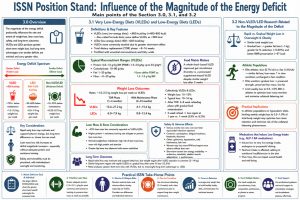
Figure 2. Continuous vs intermittent energy deficits. Overview of the comparative effects of intermittent and continuous energy restriction on weight loss and body composition, with practical considerations for fasting variants, meal frequency, protein distribution, and lean mass preservation. Figure designed with assistance from ChatGPT (OpenAI).
Show detailed figure description
Three-panel infographic comparing continuous and intermittent energy restriction, weight-loss outcomes, body composition, and meal frequency. Left panel (Overview): Intermittent fasting (IF) generally produces outcomes comparable to continuous energy restriction (CER). Common variants include alternate-day fasting (ADF), twice-weekly fasting (5:2), and time-restricted eating (TRE). IF can facilitate weight loss by creating an overall energy deficit without requiring continuous dietary tracking. Center panel (IF evidence): Reviews comparative effectiveness, weight loss, lean-mass preservation, and nutrient quality. IF offers no consistent long-term advantage over CER. ADF may produce greater weight loss through larger energy deficits but can increase lean-mass loss risk. Resistance training and adequate protein intake help preserve lean mass. Nutrient quality and protein distribution may influence outcomes. Right panel (Meal frequency): Meal frequency has little independent effect on weight loss or cardiometabolic outcomes. Muscle preservation depends primarily on adequate daily protein, resistance training, and muscle protein balance. Distributing protein across at least three protein-rich meals may support lean-mass retention during energy restriction. Bottom row: Six practical recommendations emphasize energy balance, flexible fasting approaches, lean-mass protection, individualized meal frequency, and prioritizing total daily protein intake.
图2. 持续性能量缺口与间歇性能量缺口(Continuous vs Intermittent Energy Deficits)
概述了间歇性能量限制与持续性能量限制在减重和身体组成方面的比较性效应,并结合不同禁食变式、进餐频率、蛋白质分配及瘦体重保留提出实际应用中的考量。
图示在 ChatGPT(OpenAI)的协助下设计。
图示详细说明
该图为一个由三个面板构成的信息图,比较了持续性能量限制与间歇性能量限制在体重下降、身体组成变化及进餐频率方面的影响。
左侧面板(概览,Overview)
该部分指出,间歇性禁食(Intermittent Fasting,IF)通常能够产生与持续性能量限制(Continuous Energy Restriction,CER)相近的效果。常见的间歇性禁食形式包括:
- 隔日禁食(Alternate-Day Fasting,ADF);
- 每周两次禁食(Twice-Weekly Fasting,5:2);
- 限时进食(Time-Restricted Eating,TRE)。
图示强调,间歇性禁食能够通过形成整体性能量缺口来促进减重,而不一定要求个体持续进行饮食记录或热量追踪。
中间面板(间歇性禁食的证据,IF Evidence)
该部分综述了间歇性禁食在以下方面的比较性证据:
- 干预效果;
- 体重下降;
- 瘦体重保留;
- 营养素质量。
图示指出,从长期来看,间歇性禁食相较于持续性能量限制并未表现出一致性的优势。
其中,隔日禁食可能由于产生更大的能量缺口而带来更明显的体重下降,但同时也可能增加瘦体重流失的风险。
此外,抗阻训练和充足的蛋白质摄入有助于保留瘦体重;而营养素质量及蛋白质分配方式也可能对最终干预结果产生影响。
右侧面板(进餐频率,Meal Frequency)
该部分指出,进餐频率本身对于减重或心血管代谢结局几乎没有独立性影响。
肌肉保留主要取决于以下因素:
- 充足的每日蛋白质摄入;
- 抗阻训练;
- 肌肉蛋白平衡。
图示进一步指出,在能量限制状态下,若将蛋白质分配至至少三次富含蛋白质的进食时段中,可能有助于瘦体重的保留。
底部部分(Bottom Row)
底部列出六项实践建议,重点强调以下原则:
- 优先关注整体能量平衡;
- 灵活选择适合个体的禁食方式;
- 注重保护瘦体重;
- 进餐频率应进行个体化安排;
- 优先确保每日蛋白质总摄入量充足;
- 在减重过程中兼顾身体组成优化。
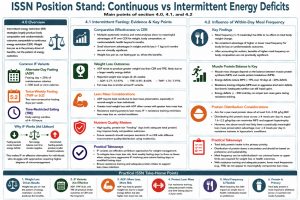
Figure 3. Influence of macronutrient composition. Overview of how protein intake and dietary carbohydrate–fat distribution influence weight loss, body composition, and related outcomes, with consideration of higher-protein, low-fat, low-carbohydrate, and ketogenic diets. Figure designed with assistance from ChatGPT (OpenAI).
Show detailed figure description
Four-panel infographic summarizing how macronutrient composition influences weight loss, body composition, and adherence. Panel 1 (Core principle): Energy balance and adequate protein intake are primary determinants of body composition. Macronutrient distribution can influence satiety and adherence. Panel 2 (High-protein diets): Higher protein intake promotes satiety, increases the thermic effect of feeding, and supports lean-mass retention. Protein needs vary with training status, body composition, and energy restriction. Panel 3 (Low-fat and low-carbohydrate diets): Low-carbohydrate diets may produce modestly greater short-term weight loss, but differences diminish over time. When energy and protein are comparable, fat loss is similar. Dietary quality and sustainability are important. Panel 4 (Ketogenic diets): Ketogenic diets induce nutritional ketosis and may produce greater short-term weight loss, but can increase lean-mass loss and LDL cholesterol. Long-term advantages are minimal or absent. Bottom row: Recommendations emphasize a consistent energy deficit, adequate protein, sustainable macronutrient choices, progress monitoring, and individualization. Long-term consistency is the central message.
图3. 宏量营养素组成的影响(Influence of Macronutrient Composition)
概述了蛋白质摄入量以及膳食中碳水化合物与脂肪的分配比例如何影响减重、身体组成及相关结局,并讨论了高蛋白饮食、低脂肪饮食、低碳水化合物饮食及生酮饮食等策略。
图示在 ChatGPT(OpenAI)的协助下设计。
图示详细说明
该图为一个由四个面板构成的信息图,用以概括说明宏量营养素组成如何影响体重下降、身体组成变化及饮食依从性。
面板1(核心原则,Core Principle)
该部分指出,能量平衡与充足的蛋白质摄入是决定身体组成变化的首要因素。
同时,宏量营养素的分配比例会对饱腹感及饮食依从性产生影响,因此也会在实际减重过程中发挥重要作用。
面板2(高蛋白饮食,High-Protein Diets)
该部分强调,较高的蛋白质摄入有助于:
- 增强饱腹感;
- 提高食物热效应(Thermic Effect of Feeding);
- 促进瘦体重保留。
图示同时指出,蛋白质需求量会因以下因素而有所不同:
- 训练状态;
- 身体组成;
- 能量限制程度。
面板3(低脂肪饮食与低碳水化合物饮食,Low-Fat and Low-Carbohydrate Diets)
该部分指出,低碳水化合物饮食在短期内可能带来略为更明显的减重效果,但这种差异通常会随着时间推移而减弱。
当总能量摄入与蛋白质摄入保持可比时,不同饮食策略之间的脂肪减少效果通常相近。
此外,图示强调,膳食质量及可持续性是决定长期效果的重要因素。
面板4(生酮饮食,Ketogenic Diets)
该部分指出,生酮饮食能够诱导机体进入营养性酮症(Nutritional Ketosis)状态,并可能带来更显著的短期体重下降。
然而,其潜在问题包括:
- 可能增加瘦体重流失;
- 可能升高低密度脂蛋白(LDL)胆固醇水平。
图示进一步指出,生酮饮食在长期中的优势很小,甚至可能不存在。
底部部分(Bottom Row)
底部列出的建议强调以下要点:
- 持续维持稳定的能量缺口;
- 保证充足的蛋白质摄入;
- 选择可长期坚持的宏量营养素分配方式;
- 持续监测减重进展;
- 实施个体化调整。
该图传达的核心信息是:长期一致性(Long-Term Consistency)才是减重成功的关键。
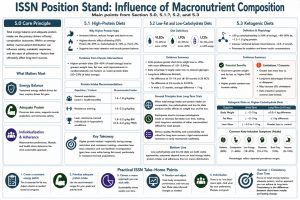
Figure 4. Adaptations to weight loss. Overview of the physical, physiological, and behavioral adaptations to weight loss, including changes in energy expenditure, adaptive thermogenesis, appetite regulation, and non-exercise activity, with practical considerations for mitigating their impact. Figure designed with assistance from ChatGPT (OpenAI).
Show detailed figure description
Four-panel infographic summarizing physical, physiological, and behavioral adaptations to weight loss. Panel 1 (Overview): Weight loss triggers compensatory reductions in energy expenditure and increases in hunger. Total daily energy expenditure includes resting metabolism, exercise, non-exercise activity, and the thermic effect of food. Panel 2 (Physical and physiological adaptations): Reduced body mass lowers the energy cost of movement. Resting energy expenditure declines with tissue loss and metabolic adaptations. Hormonal changes, including increased ghrelin and reduced satiety hormones, can promote hunger and weight regain. Panel 3 (Adaptive thermogenesis): Resting energy expenditure may decrease beyond what tissue loss predicts. This effect is often smaller than commonly claimed, particularly after weight stabilization. Diet breaks may modestly preserve resting metabolism, although body composition advantages over continuous dieting are inconsistent. Panel 4 (Non-exercise activity thermogenesis): NEAT includes walking, standing, occupational activity, and spontaneous movement. It varies widely and may decline during energy restriction. Maintaining daily movement and reducing sedentary time can help preserve energy expenditure. Bottom row: Recommendations emphasize understanding adaptations, resistance training, adequate protein, daily movement, strategic diet breaks, and monitoring progress. Long-term consistency remains central.
图4. 减重过程中的适应性反应(Adaptations to Weight Loss)
概述减重过程中出现的身体、生理及行为层面的适应性反应,包括能量消耗、适应性产热、食欲调节及非运动性身体活动等方面的变化,并提出减轻这些适应性反应所造成影响的实际应用建议。
图示在 ChatGPT(OpenAI)的协助下设计。
图示详细说明
该图为一个由四个面板构成的信息图,概括展示了减重过程中机体在身体、生理及行为层面所产生的适应性变化。
面板1(概览,Overview)
体重下降会触发机体的代偿性反应,表现为能量消耗减少及饥饿感增强。
每日总能量消耗(Total Daily Energy Expenditure,TDEE)主要包括静息代谢、运动活动、非运动性身体活动以及食物热效应等组成部分。
面板2(身体与生理适应,Physical and Physiological Adaptations)
体重下降会降低机体在身体活动过程中所需消耗的能量。
随着机体组织量减少及代谢适应性变化的发生,静息能量消耗也会相应下降。
此外,激素水平的变化,包括胃饥饿素(Ghrelin)水平升高以及饱腹感相关激素水平降低,可能进一步增强饥饿感,并促进体重反弹。
面板3(适应性产热,Adaptive Thermogenesis)
静息能量消耗的下降幅度可能超过仅根据机体组织量减少所预测的下降幅度,这一现象被称为适应性产热(Adaptive Thermogenesis)。
然而,这种效应的实际程度通常小于普遍认知或相关论述中所声称的水平,尤其是在体重达到并维持稳定状态后。
策略性饮食间歇(Diet Breaks,即阶段性暂停能量限制)可能在一定程度上有助于维持静息代谢水平,但与持续性节食相比,其在改善身体组成方面的优势尚未得到一致证实。
面板4(非运动性活动产热,Non-Exercise Activity Thermogenesis)
非运动性活动产热(Non-Exercise Activity Thermogenesis,NEAT)包括步行、站立、职业性身体活动以及自发性身体活动等所产生的能量消耗。
NEAT在不同个体之间存在较大差异,并且可能在能量限制期间出现下降。
维持日常身体活动水平并减少久坐时间,有助于减轻非运动性活动产热下降所造成的影响,从而更好地维持机体的总体能量消耗。
底部部分(Bottom Row)
底部提出的实践建议重点强调以下原则:
- 理解减重过程中机体所产生的适应性反应;
- 坚持抗阻训练;
- 保证充足的蛋白质摄入;
- 维持日常身体活动水平;
- 合理安排策略性饮食间歇;
- 持续监测减重进展。
该图进一步强调,长期保持干预措施的一致性,仍然是成功实现体重管理的核心要素。
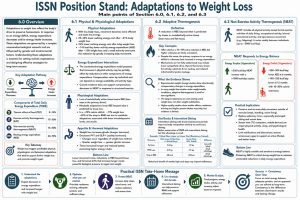
Figure 5. Weight loss plateaus. Overview of the physiological and behavioral factors underlying weight loss plateaus, with practical strategies for assessing progress, managing plateaus, and transitioning between continued weight reduction and weight maintenance. Figure designed with assistance from ChatGPT (OpenAI).
Show detailed figure description
Three-panel infographic summarizing the causes, assessment, and management of weight loss plateaus. Left panel (Overview): Weight loss commonly slows after initial progress, with maintenance or regain often occurring later. Apparent plateaus may reflect water retention, glycogen changes, or other short-term fluctuations rather than stalled fat loss. Center panel (Theory): Plateaus arise primarily from a new energy equilibrium or reduced dietary and exercise adherence. Trend weight and additional measures help distinguish genuine stagnation from normal fluctuations or body recomposition. Under-reporting of energy intake is common. Body weight regulation is discussed through set-point, settling-point, and dual intervention-point models. Right panel (Practice): Recommended strategies include viewing weight stability as an opportunity to practice maintenance, using planned diet breaks or maintenance phases, and temporarily shifting goals toward exercise performance or skill development. Progress should be monitored using multiple measures, including body composition, circumferences, and performance. Professional guidance, social support, and food preparation skills can improve long-term management. Bottom row: Six take-home points emphasize expecting plateaus, objective assessment, checking adherence, strategic adjustments, tracking meaningful outcomes, and seeking support.
图5. 减重平台期(Weight Loss Plateaus)
概述减重平台期形成的生理及行为因素,并提出评估减重进展、管理平台期,以及在继续减重与体重维持阶段之间进行过渡的实用策略。
图示在 ChatGPT(OpenAI)的协助下设计。
图示详细说明
该图为一个由三个面板构成的信息图,概括展示了减重平台期的形成原因、评估方法及管理策略。
左侧面板(概览,Overview)
在经历初期的体重下降后,减重速度通常会逐渐放缓,而在后续阶段,个体往往可能出现体重维持不变甚至反弹的情况。
然而,表面上观察到的减重平台期,可能仅反映了水分潴留、糖原储量变化或其他短期体重波动,而不一定意味着脂肪减少已经停滞。
中间面板(理论,Theory)
减重平台期主要源于机体达到新的能量平衡状态(Energy Equilibrium),或个体对饮食及运动干预方案的依从性下降。
通过分析体重变化趋势,并结合其他辅助测量指标,有助于区分真正的减重停滞、正常的短期体重波动以及身体组成重塑(Body Recomposition)。
此外,实际能量摄入量被低报(Under-reporting)的现象较为常见,即个体报告的能量摄入量低于其实际摄入水平。
该部分还通过以下三种理论模型讨论了体重调节机制:
- 设定点模型(Set-Point Model);
- 稳定点模型(Settling-Point Model);
- 双干预点模型(Dual Intervention-Point Model)。
右侧面板(实践,Practice)
建议将体重稳定期视为练习维持既有减重成果的契机,而非仅将其视为需要突破的障碍。
可采取的策略包括:合理安排计划性饮食间歇(Diet Breaks)或体重维持阶段(Maintenance Phases),以及暂时将干预目标转向改善运动表现或发展运动技能。
减重进展的监测不应仅依赖体重这一单一指标,而应结合多种测量结果进行综合评估,包括:
- 身体组成;
- 身体围度;
- 运动表现。
此外,专业人员的指导、社会支持以及食物烹饪与膳食准备技能,均有助于改善长期体重管理效果。
底部部分(Bottom Row)
底部总结了六项核心实践要点,重点强调以下原则:
- 预期并正确认识减重平台期的出现;
- 采用客观方法评估减重进展;
- 检查饮食及运动干预方案的实际依从性;
- 根据具体情况对干预策略进行有计划的调整;
- 持续追踪具有实际意义的健康及身体组成指标;
- 必要时寻求专业指导与社会支持。
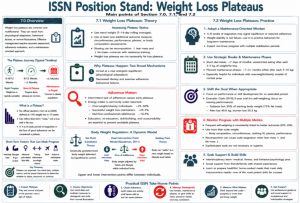
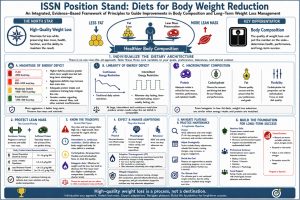
Figure 6. Diets for body weight reduction: position stand summary of principles & practical applications. Integrated overview of evidence-based principles for high-quality weight loss, emphasizing individualized dietary approaches, lean mass preservation, management of adaptations and plateaus, and the behavioral and support strategies underlying long-term weight management. Figure designed with assistance from ChatGPT (OpenAI).
Show detailed figure description
Integrated infographic presenting six principles for high-quality weight loss and long-term weight management. The top section emphasizes fat reduction while preserving lean mass, health, and function, with body composition taking priority over scale weight alone. Principle 1, Individualize the Diet: Tailor energy-deficit magnitude, continuous or intermittent restriction, and macronutrient composition to individual needs and preferences. Principle 2, Protect Lean Mass: Prioritize resistance training and adequate protein intake, particularly during energy restriction. Principle 3, Know the Tradeoffs: Consider short-term effectiveness, lean-mass retention, nutritional adequacy, and sustainability across diet types. Principle 4, Manage Adaptations: Anticipate physical, physiological, and behavioral responses to weight loss. Adaptive thermogenesis is variable and may diminish after weight stabilization. Principle 5, Navigate Plateaus: Assess progress objectively, adjust strategies when necessary, and use maintenance periods to consolidate progress. Principle 6, Build Long-Term Success: Develop nutrition skills, seek professional and social support, and individualize strategies over time. The concluding message emphasizes that high-quality weight loss is a process, not a destination, with long-term consistency as the foundation of success.
图6. 减重饮食:立场声明的核心原则与实践应用总结(Diets for Body Weight Reduction: Position Stand Summary of Principles & Practical Applications)
综合概述实现高质量减重的循证科学原则,重点强调饮食策略的个体化、瘦体重保留、减重适应性反应与平台期的管理,以及支持长期体重管理的行为策略和社会支持措施。
图示在 ChatGPT(OpenAI)的协助下设计。
图示详细说明
该图为一幅综合性信息图,系统呈现了实现高质量减重与长期体重管理的六项核心原则。
图示顶部强调,高质量减重应以减少身体脂肪为主要目标,同时尽可能保留瘦体重、维持健康状况及机体功能。在评估减重效果时,应优先关注身体组成的改善,而非仅关注体重秤所显示的数值变化。
原则1:饮食策略个体化(Individualize the Diet)
根据个体的实际需求与偏好,对能量缺口的大小、持续性或间歇性能量限制方式,以及宏量营养素组成进行针对性调整。
原则2:保护瘦体重(Protect Lean Mass)
优先考虑抗阻训练与充足的蛋白质摄入,尤其是在能量限制期间,应将尽可能保留瘦体重作为重要的干预目标。
原则3:权衡不同饮食策略的利弊(Know the Tradeoffs)
在选择饮食模式时,应综合考虑不同策略在短期有效性、瘦体重保留、营养充足性及长期可持续性等方面的表现与潜在局限。
原则4:管理适应性反应(Manage Adaptations)
应预先认识并合理应对机体在减重过程中可能产生的身体、生理及行为层面的适应性反应。
其中,适应性产热(Adaptive Thermogenesis)的发生程度存在个体差异,并且可能在体重达到稳定状态后有所减弱。
原则5:科学应对减重平台期(Navigate Plateaus)
采用客观方法评估减重进展,并在必要时对干预策略进行适当调整。
同时,可合理利用体重维持阶段(Maintenance Periods),巩固此前取得的减重成果。
原则6:建立长期成功的基础(Build Long-Term Success)
培养营养管理相关技能,积极寻求专业指导与社会支持,并随着时间推移,根据个体状况及需求的变化持续调整干预策略。
图示总结
该图最终强调:高质量减重是一个持续性的过程,而非单一的终点;长期保持干预措施的一致性,是实现成功体重管理的基础。
3. 能量缺口幅度的影响(Influence of the Magnitude of the Energy Deficit)
3.1. 极低能量饮食(VLEDs)与低能量饮食(LEDs)
Diets of the highest hypoenergetic magnitude are termed very-low-energy diets (VLEDs). Also referred to as formula diets, VLEDs are commercially produced and contain fewer than 800 kcal, with a lower end of ~400 kcal [Citation24]. Low-energy diets (LEDs) contain 800–1200 kcal/day. It is worth noting that some publications categorize 800-kcal diets as VLEDs, while others classify VLEDs as less than 800 kcals. There is no official consensus on this threshold – and this may be the reason VLEDs and LEDs in the literature are commonly lumped into a single discussion. Of the two types, VLEDs are more prolifically studied – presumably owing to their greater effect on short-term weight loss.
能量限制程度最为严格的饮食模式被称为极低能量饮食(Very-Low-Energy Diets,VLEDs)。此类饮食亦被称为配方饮食(Formula Diets),通常由商业化生产的配方食品构成,每日能量摄入低于800 kcal,其下限约为400 kcal[24]。
低能量饮食(Low-Energy Diets,LEDs)则是指每日能量摄入为800–1200 kcal的饮食模式。
值得注意的是,部分文献将每日800 kcal的饮食归类为极低能量饮食,而另一些文献则将极低能量饮食严格定义为每日能量摄入低于800 kcal。目前,学术界尚未就这一划分阈值形成正式共识。这可能也是现有文献经常将极低能量饮食与低能量饮食合并讨论的原因。
在上述两类饮食模式中,针对极低能量饮食开展的研究更为广泛,这可能是由于其能够产生更为显著的短期减重效果。
VLEDs are designed to completely replace regular/solid food intake in the initial total dietary replacement (TDR) phase for durations ranging approximately 8–16 weeks. Thus, they are fortified with essential micronutrients (vitamins, minerals) and essential fatty acids. The protein content of VLEDs generally ranges from 0.8 to 1.5 g/kg BW. The carbohydrate, fat, and fiber content range from 10 to 80 g, 1–20 g, and nearly none to 20 g, respectively. High-protein variants of VLEDs are referred to as protein-sparing modified fasts (PSMFs), with protein content ranging from 1.5 to 2.0 g/kg BW, and as high as 3.0 g/kg [Citation25]. Of note, there seems to be a lack of consensus on the definition of PSMF, since there is also literature describing its protein content as 1.2–1.5 g/kg BW [Citation26–28]. Beyond macronutrient composition, the food matrix may also influence physiological responses to VLEDs. In a recent randomized controlled-feeding trial, Lane et al. [Citation29] found that a VLED composed predominantly of whole-food ingredients increased gut microbiome diversity and richness compared with an isocaloric supplement-based VLED composed primarily of highly processed ingredients, although no between-group differences were observed in anthropometric or other clinical outcomes after 3 weeks.
极低能量饮食(VLEDs)旨在初始的全膳食替代阶段(Total Dietary Replacement,TDR)完全替代常规食物或固体食物的摄入,该阶段通常持续约8–16周。因此,此类配方饮食通常会强化添加必需微量营养素(维生素和矿物质)及必需脂肪酸。
极低能量饮食的蛋白质含量通常为每日每千克体重0.8–1.5 g,碳水化合物、脂肪及膳食纤维的每日含量则分别为10–80 g、1–20 g以及接近0至20 g。
极低能量饮食的高蛋白变式被称为蛋白质节约型改良禁食(Protein-Sparing Modified Fast,PSMF),其蛋白质摄入量通常为每日每千克体重1.5–2.0 g,最高可达3.0 g/kg[25]。
值得注意的是,目前学术界对于PSMF的定义似乎尚未形成统一共识,因为部分文献亦将其蛋白质摄入量描述为每日每千克体重1.2–1.5 g[26–28]。
除宏量营养素组成外,食物基质(Food Matrix)也可能影响机体对极低能量饮食的生理反应。
在近期开展的一项随机对照喂养试验中,Lane等人[29]发现,与主要由高度加工食材构成、以营养补充制剂为基础的等热量极低能量饮食相比,以天然完整食物(Whole Foods)为主要原料的极低能量饮食能够提高肠道微生物群的多样性及丰富度。然而,经过3周干预后,两组在人体测量学指标及其他临床结局方面均未观察到组间差异。
Weight loss on VLEDs is rapid, with rates ranging from ~1.5 to 2.5 kg per week. This substantial weight loss is expected, given the massive energy deficit imposed by VLEDs, which are typically ~75% (or more) below the daily caloric maintenance requirements of the intended user. Body weight reduction during the TDR phase of VLEDs (1–4 months) ranges from 12.4 to 27.2 kg, and with a maintenance phase (2–33 months), weight loss ranges from 4.1 to 15.4 kg. In LEDs, weight loss during the TDR phase (1–4 months) ranges from 6.9 to 7.9 kg, and with a maintenance phase, weight loss ranges from 9.9 to 12.4 kg. Collectively, VLEDs and LEDs result in weight losses of 10%–15%, with typical losses of 10–16 kg [Citation30]. After the TDR phase, a 3 to 8-week refeeding phase involving the gradual reintroduction of regular foods is typically recommended to assist in weight loss maintenance [Citation24]. Gripeteg et al. [Citation31] found that a 6-week refeeding phase resulted in significantly less weight regain than a 1-week refeeding phase (3.9% vs. 8.2%) at 52 weeks, indicating greater effectiveness of a more prolonged food-reintroduction period.
极低能量饮食(VLEDs)能够实现快速减重,每周体重下降幅度约为1.5–2.5 kg。鉴于此类饮食所产生的巨大能量缺口,这种显著的减重效果是可以预期的。通常情况下,极低能量饮食所提供的每日热量比目标人群维持当前体重所需的每日能量摄入量低约75%,甚至更多。
在极低能量饮食的全膳食替代阶段(Total Dietary Replacement,TDR),即持续1–4个月的干预期间,体重下降幅度为12.4–27.2 kg;在经历后续维持阶段(持续2–33个月)后,减重幅度为4.1–15.4 kg。
相比之下,采用低能量饮食(LEDs)的个体,在全膳食替代阶段(1–4个月)的体重下降幅度为6.9–7.9 kg;经过后续维持阶段后,减重幅度为9.9–12.4 kg。
总体而言,极低能量饮食与低能量饮食均可实现初始体重约10%–15%的下降,典型减重幅度为10–16 kg[30]。
在全膳食替代阶段结束后,通常建议安排持续3–8周的恢复进食阶段(Refeeding Phase),在此期间逐步重新引入常规食物,以帮助维持已取得的减重成果[24]。
Gripeteg等人[31]发现,在第52周随访时,与仅持续1周的恢复进食阶段相比,持续6周的恢复进食阶段能够显著降低体重反弹幅度(3.9% vs. 8.2%)。这一结果表明,适当延长常规食物的逐步重新引入期,可能更有利于长期体重管理。
A 25% lean mass loss as a result of VLEDs and LEDs is commonly reported [Citation32–34]. Illustrating this, a 12-month trial by Seimon et al. [Citation35] compared “moderate” energy restriction (25%–35% energy deficit) with “severe” energy restriction (65%–75% energy deficit for 4 months, followed by 8 months of moderate restriction) in postmenopausal women with obesity. At the 4-month mark, the weight loss in these groups was 17.4 and 7.1 kg, and the lean mass loss was 3.7 and 1.4 kg, respectively. At the 12-month mark, weight loss was 15.3 and 8.4 kg, and lean mass loss was 3.2 and 2.1 kg, respectively. Limitations to these findings are that protein intake (1.0 g/kg) was just slightly above the RDA, and no formal exercise training was engaged during the trial. On a cautionary note, there was a greater loss of total hip bone mineral density in the severe energy-restriction group compared with the moderate energy-restriction group at 12 months.
现有研究普遍报告,采用极低能量饮食(VLEDs)及低能量饮食(LEDs)进行减重时,所减少的总体重中约有25%来自瘦体重的流失[32–34]。
Seimon等人[35]开展的一项为期12个月的试验进一步说明了这一现象。该研究以绝经后肥胖女性为研究对象,比较了中等程度能量限制(“moderate” energy restriction)(能量缺口为25%–35%)与重度能量限制(“severe” energy restriction)(前4个月维持65%–75%的能量缺口,随后8个月改为中等程度能量限制)的干预效果。
在干预第4个月时,重度能量限制组与中等程度能量限制组的体重分别下降17.4 kg和7.1 kg,瘦体重分别减少3.7 kg和1.4 kg。
在干预第12个月时,两组的体重分别下降15.3 kg和8.4 kg,瘦体重分别减少3.2 kg和2.1 kg。
然而,在解释上述研究结果时,需要考虑其方法学局限性:研究参与者的蛋白质摄入量仅为每日每千克体重1.0 g,略高于蛋白质推荐膳食供给量(Recommended Dietary Allowance,RDA);此外,受试者在整个试验期间均未参与正式的运动训练。
另一个值得警惕的发现是,在第12个月时,与中等程度能量限制组相比,重度能量限制组的全髋部骨密度(Total Hip Bone Mineral Density,BMD)下降幅度更大。
译注:原文在介绍两组时先提及中等程度能量限制组,后提及重度能量限制组,但随后列出的减重数据顺序似乎与此相反。为避免误解,本译文依据数据所对应的干预强度,明确标注为重度能量限制组与中等程度能量限制组。
It should be recognized that lean mass loss during aggressive caloric restriction, especially in subjects with obesity, can be mitigated or prevented altogether via increased protein intake and resistance training [Citation36,Citation37]. A recent systematic review by Lowrie et al. [Citation38] examined the effect of VLEDs on lean mass reduction. Their review included 7 studies, ranging from 2 to 12 months in duration. Among these 7 studies, 4 included resistance training. Among these 4 studies, 2 reported losses in lean mass, while 2 reported gains in lean mass. It is important to note that the latter two studies do not qualify as VLEDs when strictly applying the definition of \<800 kcal/day. In fact, the study showing the most robust gain in lean mass (0.5 kg in 12 weeks) involved a 1120 kcal diet that contained 150 g protein [Citation37]. Missing from this meta-analysis is a 12-week trial by Bryner et al. [Citation36], who reported no significant loss of lean mass despite an 800-kcal intake. Also missing from Lowrie et al. meta-analysis is a 12-week trial by Donnelly et al. [Citation39], who reported increased muscle fiber cross-sectional area (despite reduced lean mass) in resistance-training subjects on an 800-kcal diet. Once again, these diets do not qualify as VLEDs under the \<800 kcal definition. Nevertheless, they indicate that lean mass retention is possible despite this highly aggressive caloric deficit in untrained subjects with obesity—at least in the relatively short-term.
需要认识到,在严格限制热量摄入的过程中,尤其对于肥胖受试者而言,通过增加蛋白质摄入并结合抗阻训练,可以减轻瘦体重流失,甚至完全避免其发生[36,37]。
Lowrie等人[38]近期开展的一项系统综述考察了极低能量饮食(VLEDs)对瘦体重减少的影响。该综述共纳入7项研究,干预持续时间为2–12个月。其中,4项研究包含抗阻训练干预;在这4项研究中,2项报告了瘦体重下降,而另外2项则报告了瘦体重增加。
需要特别指出的是,如果严格采用每日能量摄入低于800 kcal的定义,后两项报告瘦体重增加的研究实际上并不符合极低能量饮食的分类标准。事实上,其中瘦体重增加最为显著的一项研究采用了每日提供1120 kcal能量、含150 g蛋白质的饮食方案,并在12周内观察到瘦体重增加0.5 kg[37]。
Lowrie等人的Meta分析未纳入Bryner等人[36]开展的一项为期12周的试验。该研究发现,尽管受试者每日能量摄入仅为800 kcal,其瘦体重仍未出现显著下降。
此外,该Meta分析亦未纳入Donnelly等人[39]开展的另一项为期12周的试验。该研究报告,在每日摄入800 kcal并接受抗阻训练的受试者中,尽管瘦体重有所下降,但肌纤维横截面积(Muscle Fiber Cross-Sectional Area)却有所增加。
同样需要强调的是,根据每日能量摄入严格低于800 kcal的定义,上述采用800 kcal饮食方案的研究并不属于极低能量饮食。
尽管如此,这些研究结果仍然表明,即使处于如此严格的热量限制条件下,既往未接受过系统训练的肥胖个体仍有可能保留瘦体重——至少在相对较短的干预周期内是如此。
For normal-weight or lean subjects, VLEDs and LEDs may potentially pose the risk of lean mass loss, regardless of protein and exercise training interventions. For example, a 21-day trial by Pasiakos et al. [Citation40] compared protein intakes of 0.8, 1.6, and 2.4 g/kg in normal-weight subjects who engaged in moderate levels of cardiorespiratory and resistance training while on a 40% caloric deficit diet, which is only approximately half the deficit imposed by a VLED. Lean mass losses (as a percentage of total body weight) were 58%, 30%, and 36%, respectively. Quoting Mustajoki and Pekkarinen [Citation24]: “VLEDs should never be used by normal-weight subjects because it leads to excessive loss of lean body mass. This warning should be widely communicated.”
对于正常体重或体脂水平较低的受试者而言,即使采取增加蛋白质摄入及运动训练等干预措施,极低能量饮食(VLEDs)与低能量饮食(LEDs)仍可能带来瘦体重流失的风险。
例如,Pasiakos等人[40]开展了一项为期21天的试验,比较了正常体重受试者在不同蛋白质摄入水平下的身体组成变化。三组受试者的每日蛋白质摄入量分别为每千克体重0.8 g、1.6 g和2.4 g。在干预期间,所有受试者均维持40%的能量缺口,并进行中等强度的心肺耐力训练及抗阻训练。值得注意的是,该研究所采用的能量缺口仅约为极低能量饮食所产生能量缺口的一半。
研究结果显示,三个蛋白质摄入组的瘦体重流失比例(原文表述为占总体重的百分比)分别为58%、30%和36%。
正如Mustajoki和Pekkarinen[24]所强调的:
“正常体重人群绝不应采用极低能量饮食,因为这种饮食会导致瘦体重过度流失。这一警示应得到广泛传播。”
译注:原文将58%、30%和36%描述为瘦体重流失量占总体重的百分比(as a percentage of total body weight),但这一表述存在明显歧义。结合上下文,这些数值更可能指瘦体重流失量占总体重下降量的比例,而非初始总体重的比例。此处保留原文数据及其表述,不擅自修改研究结果。
In subjects with obesity, more rapid initial weight loss has been associated with greater long-term weight loss [Citation41–43], conceivably by serving as a motivator that leads to healthy behaviors and habit-learning [Citation41]. This finding has implications for the superiority of VLED and LED use in obese subjects. However, weight regain after VLED cessation is a concern, ranging from 2–14 kg in post-intervention periods ranging from 8 days to 5 years [Citation33]. Furthermore, Purcell et al. [Citation42] reported similar weight regain rates between rapid initial weight loss (VLED) versus gradual weight loss (400–500 kcal deficit) after achieving a reduction of 12.5% of baseline body weight. By the end of the 2.7-year maintenance period, both groups regained 73.6% of their lost body weight. Along these lines, a meta-analysis by Tsai and Wadden [Citation44] examined trials with a follow-up assessment at least 1 year after maximum weight loss, and reported greater short-term weight loss with VLEDs (16.1%) versus LEDs (9.7%), but there was no statistically significant difference in the long-term weight loss between the diet types (6.3% vs 5.0%). A more recent systematic review and meta-analysis by Parretti et al. [Citation45] found that VLEDs combined with a behavioral program produced 3.9 kg greater weight loss at 1 year than a behavioral program alone. This advantage decreased to 1.4 kg at 2 years and 1.3 kg at 38–60 months, with the difference no longer statistically significant at the latter time point. While these differences might be statistically significant, the practical significance of greater weight loss in VLEDs is greatly diminished after 1 year.
在肥胖人群中,初期较快的减重速度与更显著的长期减重效果存在关联[41–43]。一种可能的解释是,初期快速减重能够发挥激励作用,促使个体采取健康行为并逐步形成良好的生活习惯[41]。这一发现对于评估极低能量饮食(VLEDs)和低能量饮食(LEDs)在肥胖人群中的潜在优势具有重要意义。
然而,停止极低能量饮食干预后的体重反弹仍是一个值得关注的问题。在干预结束后8天至5年的不同随访期间,研究报告的体重反弹幅度为2–14 kg[33]。
此外,Purcell等人[42]报告,在达到初始体重下降12.5%的目标后,采用初期快速减重策略(VLED)与渐进式减重策略(每日维持400–500 kcal的能量缺口)的两组受试者,其后续体重反弹比例相近。在为期2.7年的体重维持阶段结束时,两组均重新增加了此前所减去体重的73.6%。
与上述结果一致,Tsai和Wadden[44]开展的一项Meta分析纳入了在达到最大减重幅度后至少进行1年随访评估的临床试验。结果显示,与低能量饮食相比,极低能量饮食能够产生更为显著的短期减重效果(16.1% vs. 9.7%);然而,两种饮食模式在长期减重效果方面并不存在统计学显著差异(6.3% vs. 5.0%)。
Parretti等人[45]开展的一项较新的系统综述与Meta分析进一步发现,与单独实施行为干预方案相比,极低能量饮食联合行为干预方案在干预1年后可实现额外3.9 kg的体重下降。然而,这一优势在第2年缩小至1.4 kg,并在第38–60个月进一步缩小至1.3 kg,且在最后一个随访时间点,两组间差异已不再具有统计学显著性。
因此,尽管部分研究所观察到的组间差异可能具有统计学显著性,但在干预持续超过1年后,极低能量饮食所带来的额外减重优势,其实际应用意义(Practical Significance)已显著减弱。
Serious adverse effects of VLEDs (including sudden death precipitated by cardiac arrhythmias) were more prevalent in earlier research [Citation33,Citation46]. However, a 17-study systematic review by Sallahewa et al. [Citation47] reported no major adverse events except for one study involving a non-fatal myocardial infarction. The most common complaints are constipation, fatigue/muscle weakness, headache, and dizziness [Citation30]. Additional potential adverse effects include gallstones [Citation48], hypotension [Citation46], cold intolerance, and hair loss [Citation44]. A large, multi-center trial by Christensen et al. [Citation49] (the PREVIEW study) examined the 8-week effects of an 810-kcal LED in 2224 overweight, prediabetic subjects with prediabetes, and found that compared to men, women lost less fat mass (7.09 vs. 9.33 kg) and more FFM (3.17 vs. 1.90 kg). Women also had a higher prevalence of adverse effects than men during and immediately after the trial, including constipation, diarrhea, nausea, dizziness, headache, infection, and hair loss. Gout was the only one of the fifteen adverse effects for which men exhibited a higher prevalence. Jeppesen et al. [Citation50] reported that short-term severe low energy availability was associated with adverse endocrine, metabolic, and skeletal-muscle adaptations and impaired exercise performance.
在早期研究中,极低能量饮食(VLEDs)所引发的严重不良反应较为常见,其中包括由心律失常诱发的猝死[33,46]。
然而,Sallahewa等人[47]开展的一项纳入17项研究的系统综述发现,除其中一项研究报告了非致死性心肌梗死事件外,其余研究均未报告重大不良事件。
极低能量饮食最常见的不良反应包括便秘、疲劳或肌肉无力、头痛及头晕[30]。其他潜在不良反应还包括胆结石[48]、低血压[46]、不耐寒及脱发[44]。
Christensen等人[49]开展的一项大规模多中心试验(PREVIEW研究),纳入了2224名超重且处于糖尿病前期的受试者,考察了每日摄入810 kcal的低能量饮食(LED)在8周干预期间所产生的影响。
研究发现,与男性相比,女性的脂肪量减少幅度较小(7.09 kg vs. 9.33 kg),但去脂体重(Fat-Free Mass,FFM)的减少幅度更大(3.17 kg vs. 1.90 kg)。
此外,在试验期间及试验结束后不久,女性的不良反应发生率也高于男性,包括便秘、腹泻、恶心、头晕、头痛、感染及脱发等。在研究考察的15项不良反应中,痛风是唯一一项男性发生率高于女性的不良反应。
Jeppesen等人[50]进一步报告,短期严重低能量可用性(Severe Low Energy Availability)与内分泌、代谢及骨骼肌系统的不良适应性变化,以及运动表现受损存在关联。
For individuals on prescription medications for weight loss, such as the GLP-1 RA class of medicines, the effect is an induction of low to very low energy intake, analogous to purposeful dieting. Research demonstrates that, with such caloric restriction, nutrient intake is affected, adding to nutritional insufficiencies in the diet [Citation51], which over time, impacts overall health and well-being for the individual.
对于使用处方减重药物(如胰高血糖素样肽-1受体激动剂,GLP-1 RAs)的个体而言,此类药物可诱导低至极低水平的能量摄入,其效果与主动实施饮食限制的减重策略类似。
研究表明,在此类热量限制条件下,个体的营养素摄入也会受到影响,从而进一步加剧膳食中营养素摄入不足的问题[51]。随着时间推移,这种营养摄入不足可能对个体的整体健康状况及身心健康产生不利影响。